Temporary department
Planetary Poetics
About
The unfolding ecological catastrophe is one of the most pressing challenges of our times. The devastating consequences of economies based on extraction and exhaustion can be found in dilapidated lands, rivers, seas and oceans, forests, animals, plants and peoples. Some of the violence of the ecological crisis occurs slowly and out of direct sight, gradually altering our environment, climate and bodies. Most of the violence however, has been playing out for centuries already, on a local scale, directly affecting millions of people and their livelihoods.
How do we arrive at a critical and imaginative position with regard to this crisis and its long history that casts dark shadows far beyond the present? Which artistic strategies can be employed by cultural practitioners to engage and intervene? How to connect to the struggles and the movements of people who have been enduring and resisting these neo-colonial forces on a daily basis? How to learn from and with, and embrace alternative visions for this planet, beyond relations of property and extermination?
Through the temporary masters programme Planetary Poetics, hosted in collaboration with Framer Framed and organised in collaboration with Futuros Indígenas (Mexico) and Atelier Picha (DRC), we want to connect different social ecologies across the globe and experiment with new possibilities of collective imagination, creation and intervention.
Planetary Poetics, Ulamila Bulamaibau, 2023.
Curriculum
The two-year masters is divided in four semesters and consists of a programme of individual and group tutorials, a series of collaborative workshops organised with partners in Mexico and the Democratic Republic of Congo and a programme of guest lectures and artist talks.
Over the course of two years participants of the programme are expected to develop their own individual artistic research projects in conversation with colleagues and (guest) tutors. The projects will be publicly presented on various occasions, including the graduation show.
Through different series of collaborative workshops participants in Amsterdam will enter in conversation and collaboration with cultural practitioners and activists working in different geographies that are at stake. Collectively we will employ different strategies to connect, exchange, and direct the collaboration. The workshops will include individual and group exercises and the contact with the partnering institute and the participants takes place over the internet. Research – artistically, theoretically and historically – will play a crucial role. The acknowledgment of the different positions we embody is of importance here, as one's position might pose different questions or demand different actions. Research methods might take the form of interviews, field trips, staged court cases, documentary filmmaking or experiments with poetic imagination. Outcomes will be publicly presented at Framer Framed and at the partner locations.
An important element of the masters will be the biweekly public programme of guest lectures and artist talks where international thinkers, artists and activists will explore key concepts of the ecological crisis, as well as historical processes that have brought the crisis about. We will go beyond the hegemonic monoculture of Northern epistemologies and include questions of climate justice, land restitution and reparations, reproductive justice and constellations of co-resistance.
Students will work collectively as well as individually around some of the questions the environmental crisis provokes. Together we will explore ways to artistically intervene and respond to the crisis and we will experiment with different self-organised strategies to create networks of solidarity beyond existing power dynamics. Our students have a background in different disciplines, including art, performance, writing, moving image, design, curating and activism. We will take a bottom-up approach to learning, thereby giving space to the different types of knowledge that each of the participants brings to the classroom.
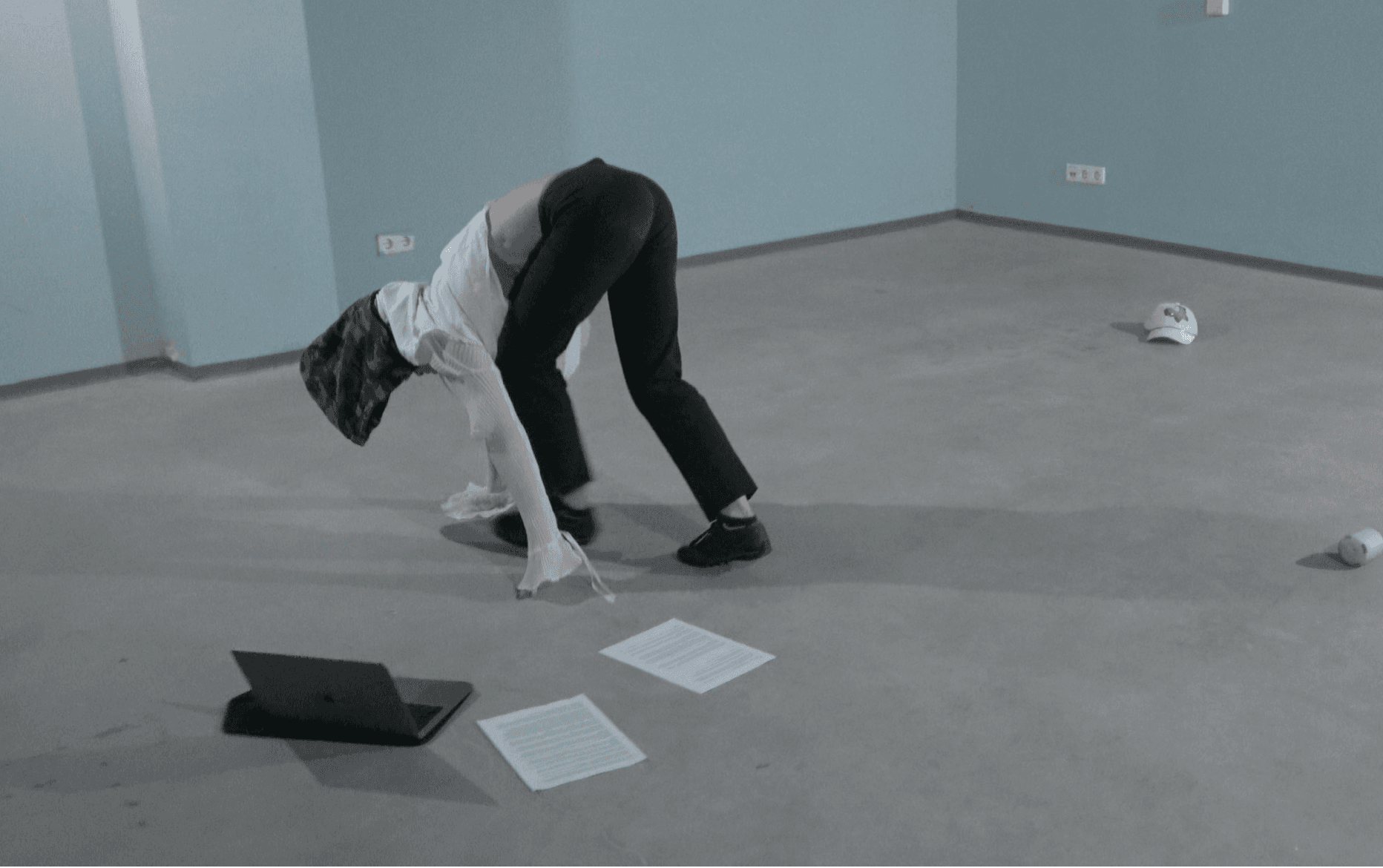
CCYOU, Toni Steffens, 2024.
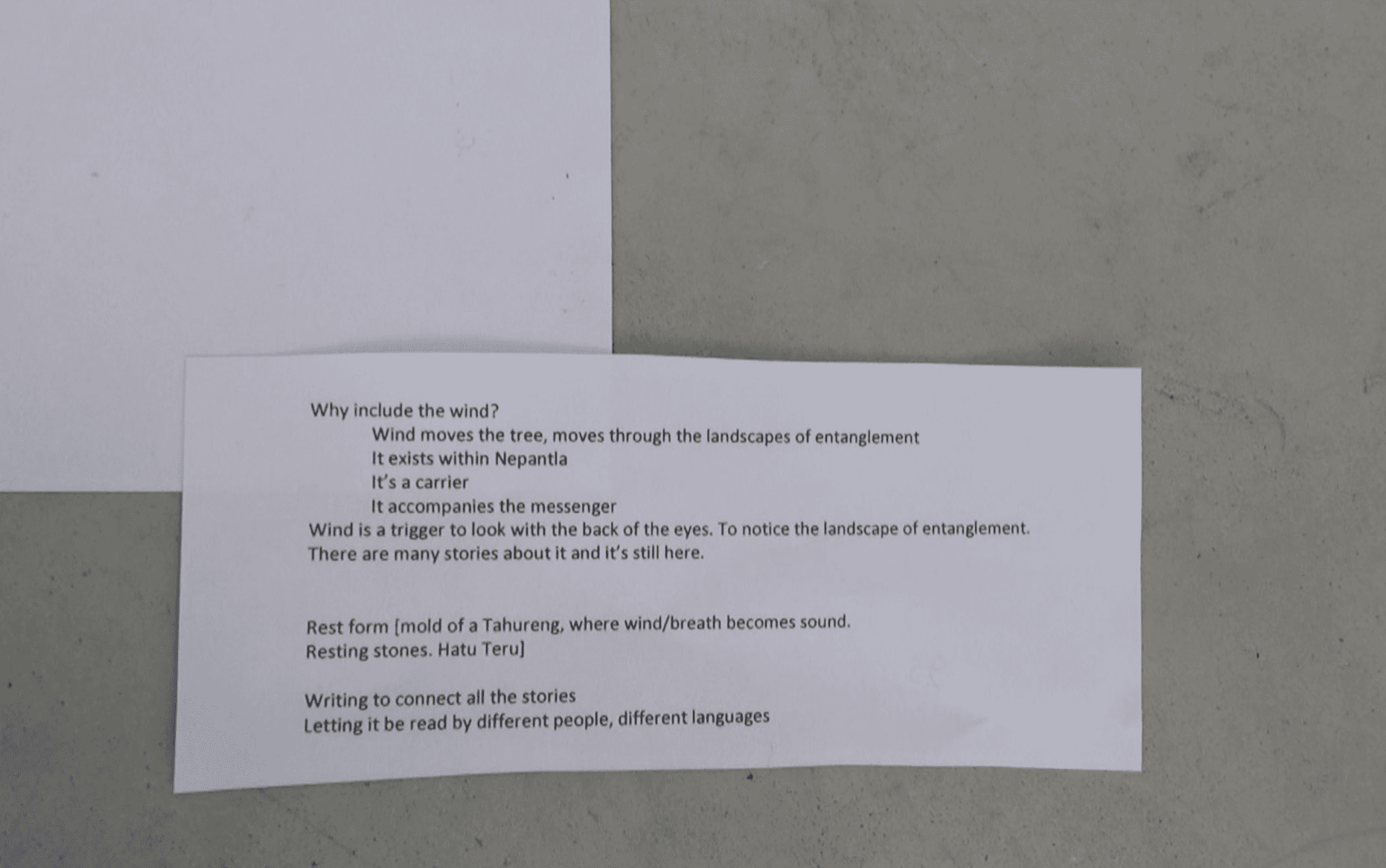
La’wai Tlale, In The Middle of Everywhere, Finn Maätita, 2024.
Bethany%2520Copsey2024.png&w=3840&q=75)
Land & Soil, performance by Bethany Copsey, 2024.
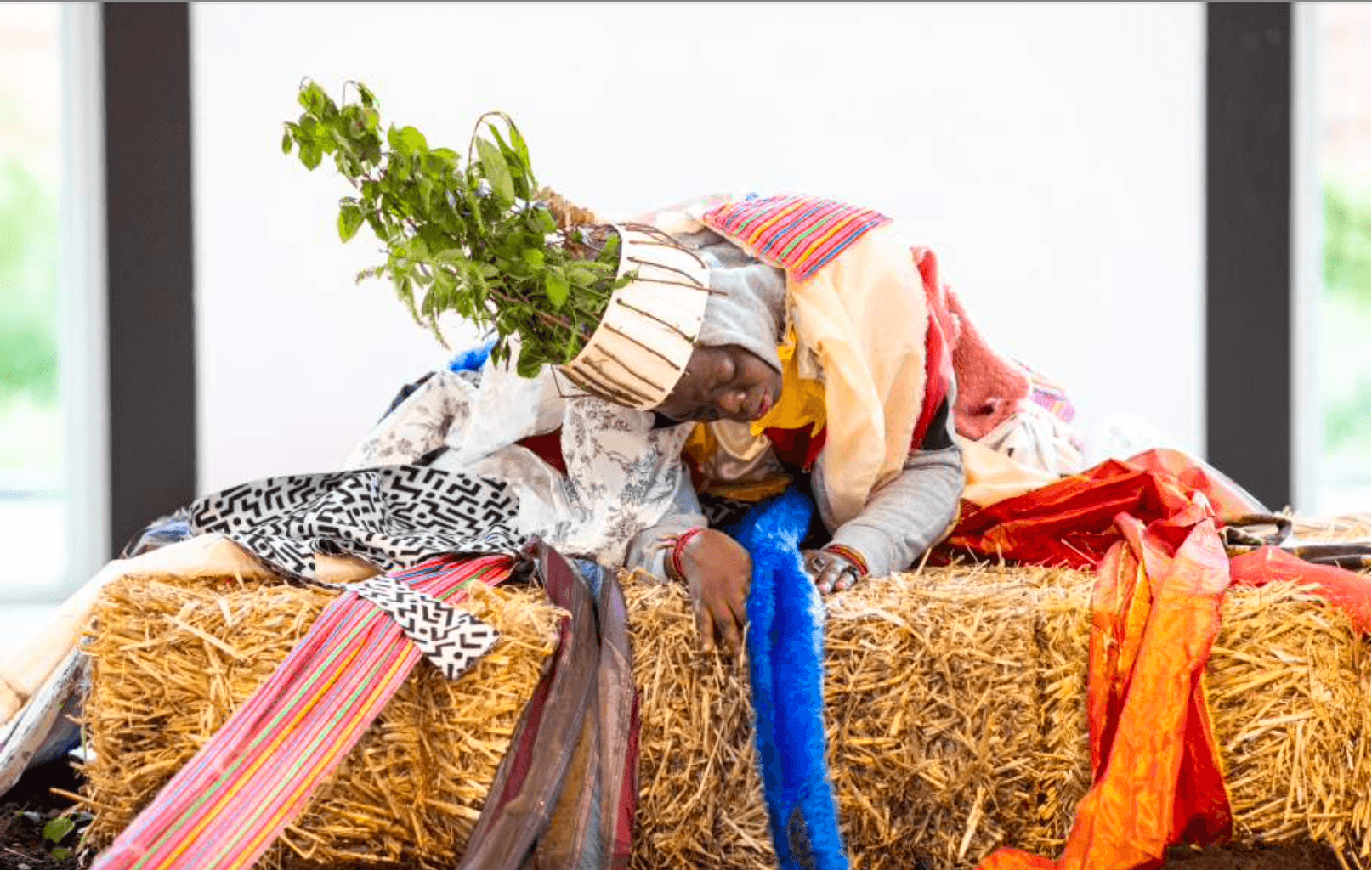
Maintaining the Root, performance by Sarah Ndele at Framer Framed, 2024.
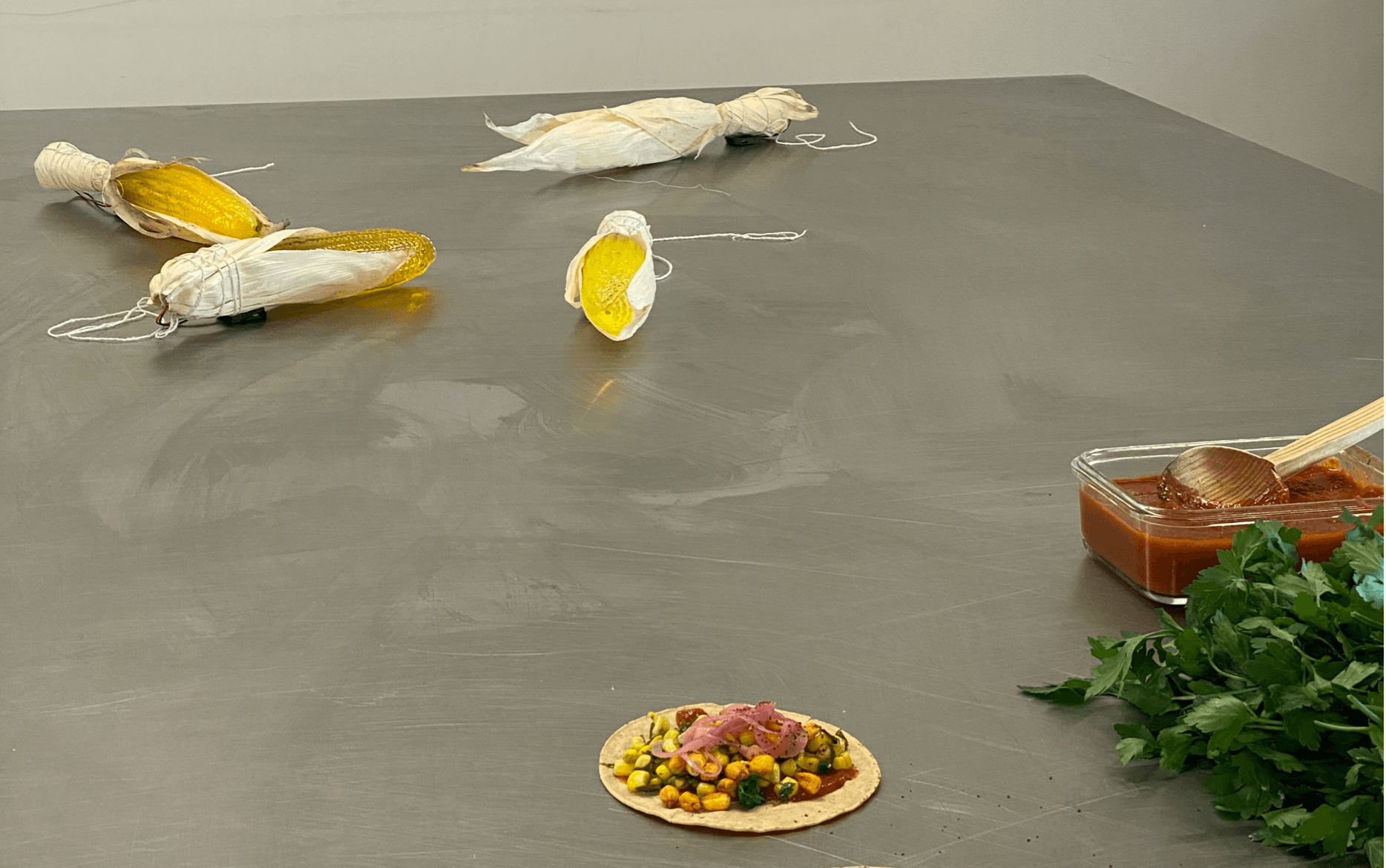
Menu: Preparing the Soil, by Lucila Pacheco Dehne, 2024.
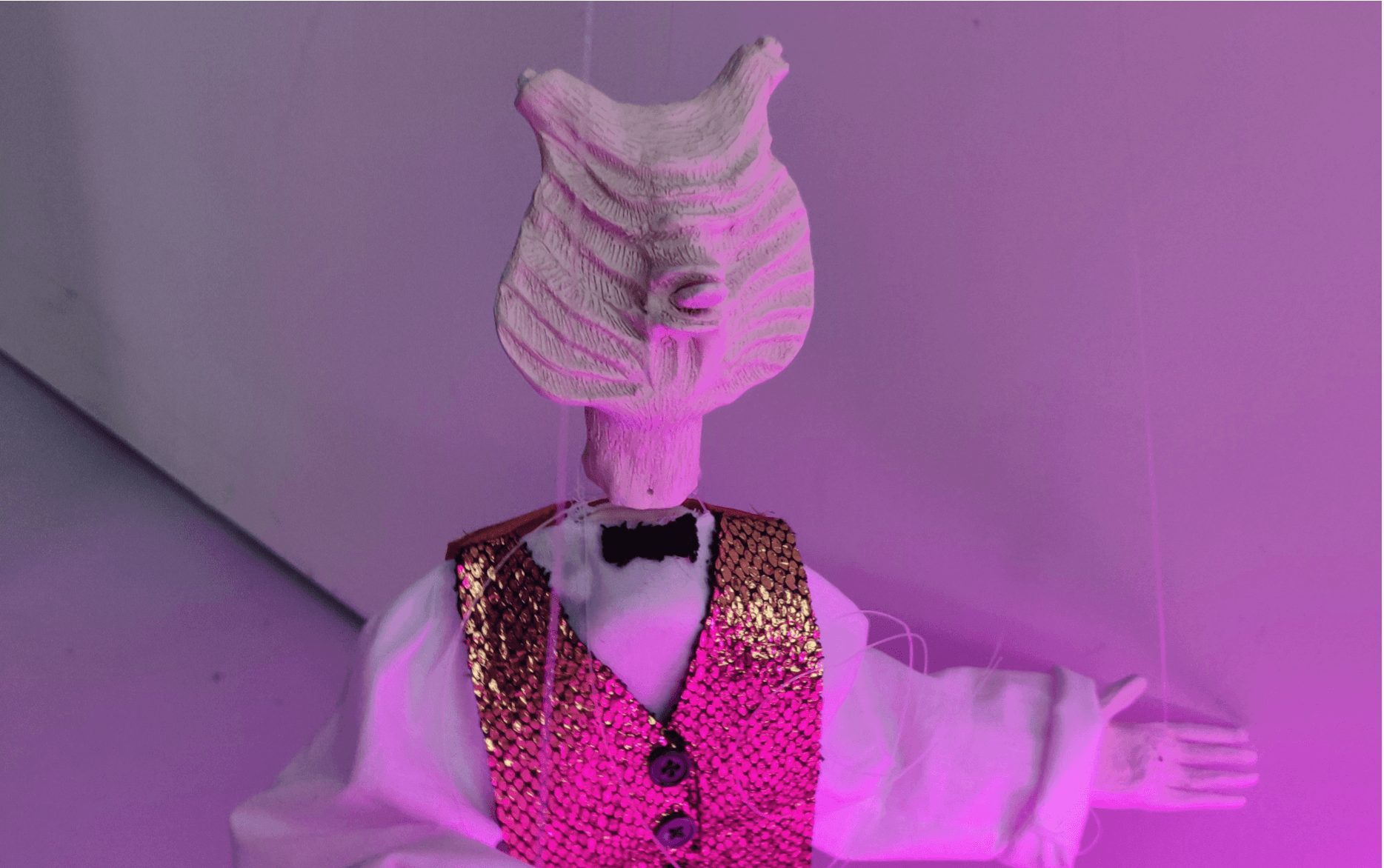
Mudskipper Croupier, Olivia D' Cruz, 2024.
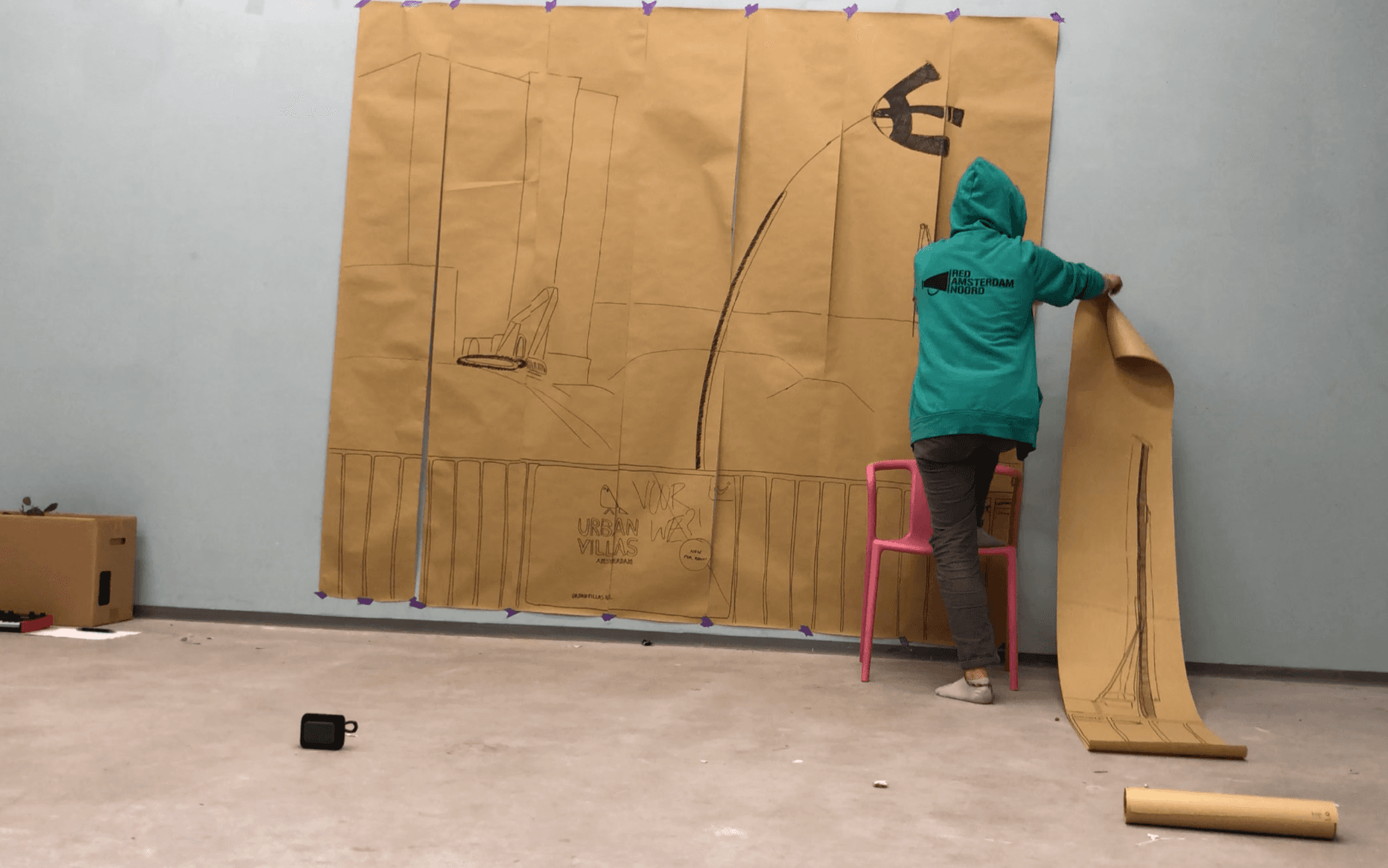
Performance by Marik de Koning, 2024.
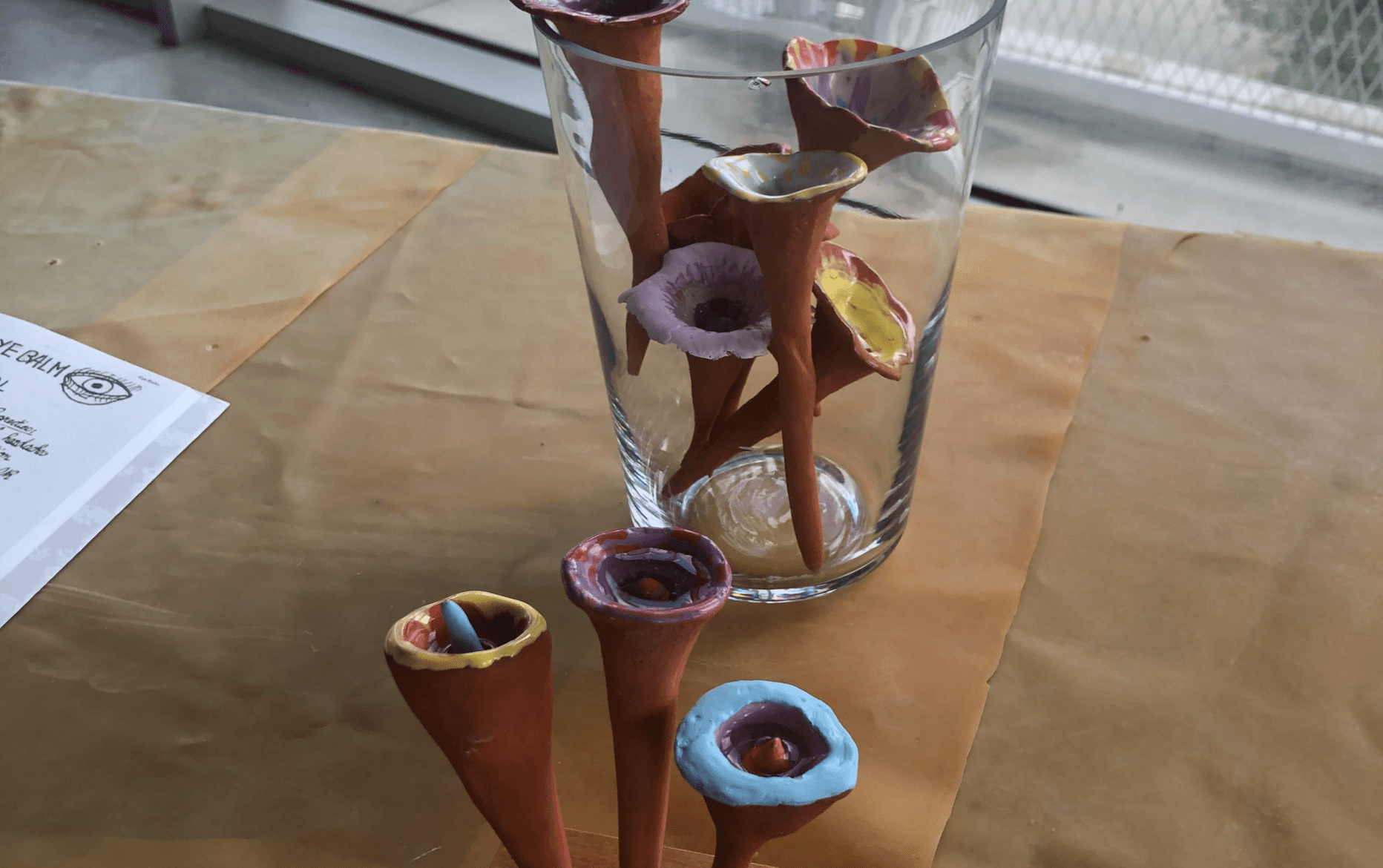
Research Presentation, Arthur Guilleminot, 2024.
Collaborations
Partnership with Framer Framed
The master's programme is co-initiated and organised with Framer Framed, a platform for contemporary art, visual culture, and critical theory & practice. Each year the organisation presents a variety of exhibitions in collaboration with both emerging and established international curators and artists. An extensive public program is organised alongside these exhibitions in order to shed light on the topics concerned, and provide a wide range of perspectives. They have organised multiple projects that address the climate crisis, including the exhibitions Court for Intergenerational Climate Crimes (2021-2022) by Radha D’Souza and Jonas Staal and Charging Myths (23 February - 4 June 2023) by the artist collective On-Trade-Off, as well as public programs such as Crisis Imaginaries a series of events organised with the Goethe-Institut Niederlande.
Counter-extractivism: Poetics of remedy and transmission
Collaboration with Picha Atelier (DRC)
4 March – 29 April 2024
A collaboration is organised with Atelier Picha, an independent art initiative that seeks to promote artistic creation in the Democratic Republic of Congo. It aims to further an artistic perspective on the endogenous reflection of the historical and social environment of Lubumbashi and the region. Picha strives to be a project incubator and laboratory. Fuelled by a sense of urgency, in 2015 Picha asked itself how local artists could benefit from the general interchange sparked by globalisation without giving in to a homogenisation of styles or viewpoints. It therefore developed an experimental tool to help guide artists both conceptually and methodologically in the creation of their artistic projects: Atelier Picha. This collaboration is being developed and led by cultural practitioner, researcher and writer Jean-Sylvain Tshilumba Mukendi.
Towards ËCONEÊRÃ, an exercise in solidarity
Collaboration with Taita Hernando Chindoy (Colombia)
12 April – 18 May 2024
Towards ËCONEÊRÃ, an exercise in solidarity* is a course developed by Inga leader Hernando Chindoy and artist and educator Milena Bonilla. The project brings together around 13 students from the Sandberg Institute in Amsterdam and Central Saint Martins in London for a series of 6 workshops. Participants are invited to explore the relationship between territory, the (collective) body, non-human agencies and differentiated notions of medicine within knowledge coming from Andean practices of non-violent resistance, among others. Gathering between Sandberg and outdoor spaces, aiming for different forms of learning such as exercises in listening and sharing, the following questions will be addressed: What do we mean when we say that a place needs healing? What are the historically suppressed narratives and notions of territory that are constantly displaced for the sake of centric ideas of nation-states? Is there a way to look at the idea of land in a different manner? Is there a way to recover from a modernity entrenched into memory erasure?
Milpamerica: Re-member, Re-story, Re-pair
Collaboration with Futuros Indígenas (Mexico) and CMN (USA)
10 October 2023 – 23 January 2024
As part of the programme students are invited to work together with climate activists from Futuros Indígenas, one of Latin America's leading networks in the restoration and preservation of Indigenous Peoples’ rights for autonomous identities. Read their full statement here. We are also working together with the College of Menominee Nation, a tribal Land Grant college, informed by ancient knowledge and chartered by the Menominee People. The collaboration is organised by artist and activist Chihiro Geuzebroek in collaboration with Rosa Marina Flores Cruz and centers Indigenous memory of how earth and earthlings got into the current existential crisis. We will learn from different Indigenous speakers from Milpamerica, the land of corn that is marked by colonization since 1492.Through weekly individual, buddy-pair and group exercises participants will explore re-membering, re-storying & repairing. Re-member entails both recalling the erased and misrepresented as well as rekindling relationships and belonging to the web of life we wish to revitalize. With Re-story participants will use their positionality and solidarity to tilt analysis, protagonists and perspective in the environmental artistic work they wish to strengthen. Repair will look at the imagination to speculate other futures. Both groups of participants will work towards creating a collective zine and performance that will function as a poetic dialogue of re-membering, re-storying and reparative visions.
Ancestral Assemblage
Collaboration with Ismal Muntaha and Jatiwangi Art Factory (Indonesia)
12–27 February 2024
Another collaboration is established between Ismal Muntaha from Jatiwangi Art Factory and guests, including activist Raki Ap, curator Getrude Flentge, ook_huis (artists Reinaart Vanhoe & Mariëlle Verdijk) and poet Khairani Barokka. The collaboration focuses on the region Jatiwangi in Indonesia, to which a new industrial wave has come in the last 5 years. The social and economic realities of Jatiwangi are slowly changing, the decline of the roof tile industry coincides with the regional government project which wants to include Jatiwangi as part of the Special Economic Zone (KEK) called the Rebana Triangle, a large scale manufacturing industrial area. In the context of the industrial transformation, Jatiwangi art Factory tries to offer cultural meanings and new relationships to land through artistic practices in various forms such as terracotta, festivals, exhibitions and new rituals. That land, which for hundreds of years has been so vital to Jatiwangi's economy and understood only as an economic commodity, is given a new meaning that never existed before, land as a cultural identity. The artist Ismal Muntaha will open these questions with the students through a series of 9 workshops.
ENERGY STORAGE Research Studio || Transdisciplinary alliances amidst planetary crises
Collaboration with Leiden University
1–16 April 2025
The ENERGY STORAGE Research Studio assembles a transdisciplinary alliance to (re)think our practices amidst planetary crises. We zoom in on storage and conversion of energy as a black box of the energy transition and explicate its molecular, technical, political, environmental and aesthetic aspects. Opening up storage enables us to contest obfuscated interests, values and relations: whose needs, what worlds are being served by high-tech storage solutions like batteries and hydrogen?
Over the course of a month, we will investigate storage concepts and technologies from a diversity of perspectives, like how to include mining into stories around energy storage, and how to rethink storage outside of the profit-driven frames of incessant economic growth?
With a transdisciplinary alliance of practitioners from the sciences, humanities, arts and activism, we will explore the theme of energy storage and conversion into alternative and heterodox directions. The main focus in the research studio will lie on collaboration and collective creation by the participants in an open and online ‘transdisciplinary lab journal’.
WASALIWA
Collaboration with Oceania Arts Centre (Fiji) and Framer Framed (NL)
5 – 8 June 2023
As part of the masters programme we have organised a first pilot collaboration with Framer Framed and the Oceania Arts Centre in Fiji. This collaboration brings together two groups of artists and writers based in Fiji and Amsterdam to look at the ecological crisis from the specific locality of the Pacific Islands and its roots in the violent (neo-) colonialist practices of deforestation, militarisation, nuclear testing and pollution. Climate change itself is adding further threats to the liveability of the islands due to increasing floods and drought, storm surges and Pacific tropical cyclones, ocean acidification and coral reef bleaching. By working parallel between the two different social and political contexts, we aim to open a dialogue in which the crisis can be understood and taken on collectively via artistic contributions. Through a call and response format, the artists will be invited to prepare “gifts” for one another, which will be developed under the guidance of the artists Susie Elliott and Dorine van Meel.
This project is kindly supported by the Centre of Expertise for Creative Innovation (CoECI).
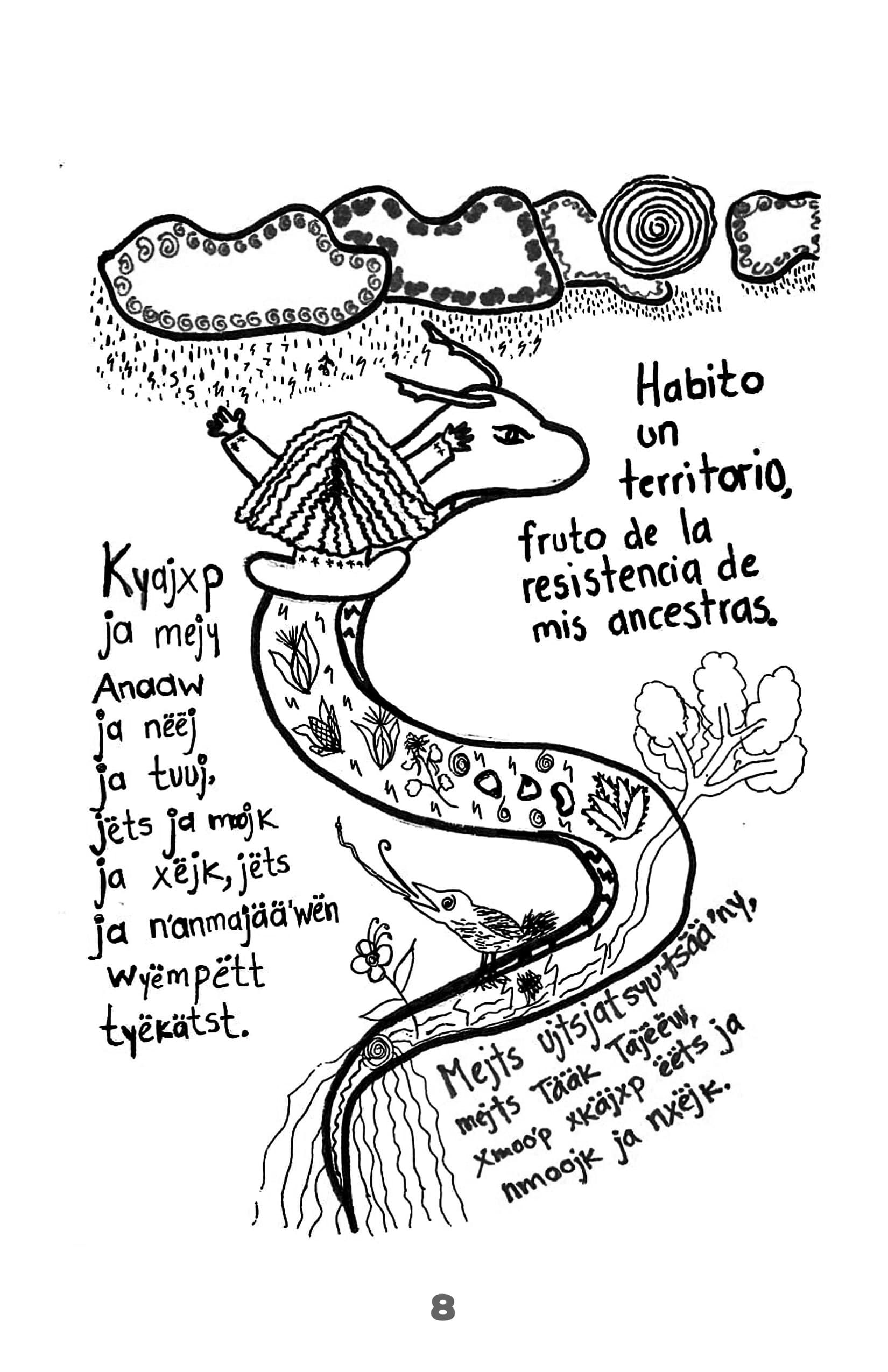
Zine: Milpamerica Re-member, Re-story, Re-pair Collaboration with Futuros Indígenas
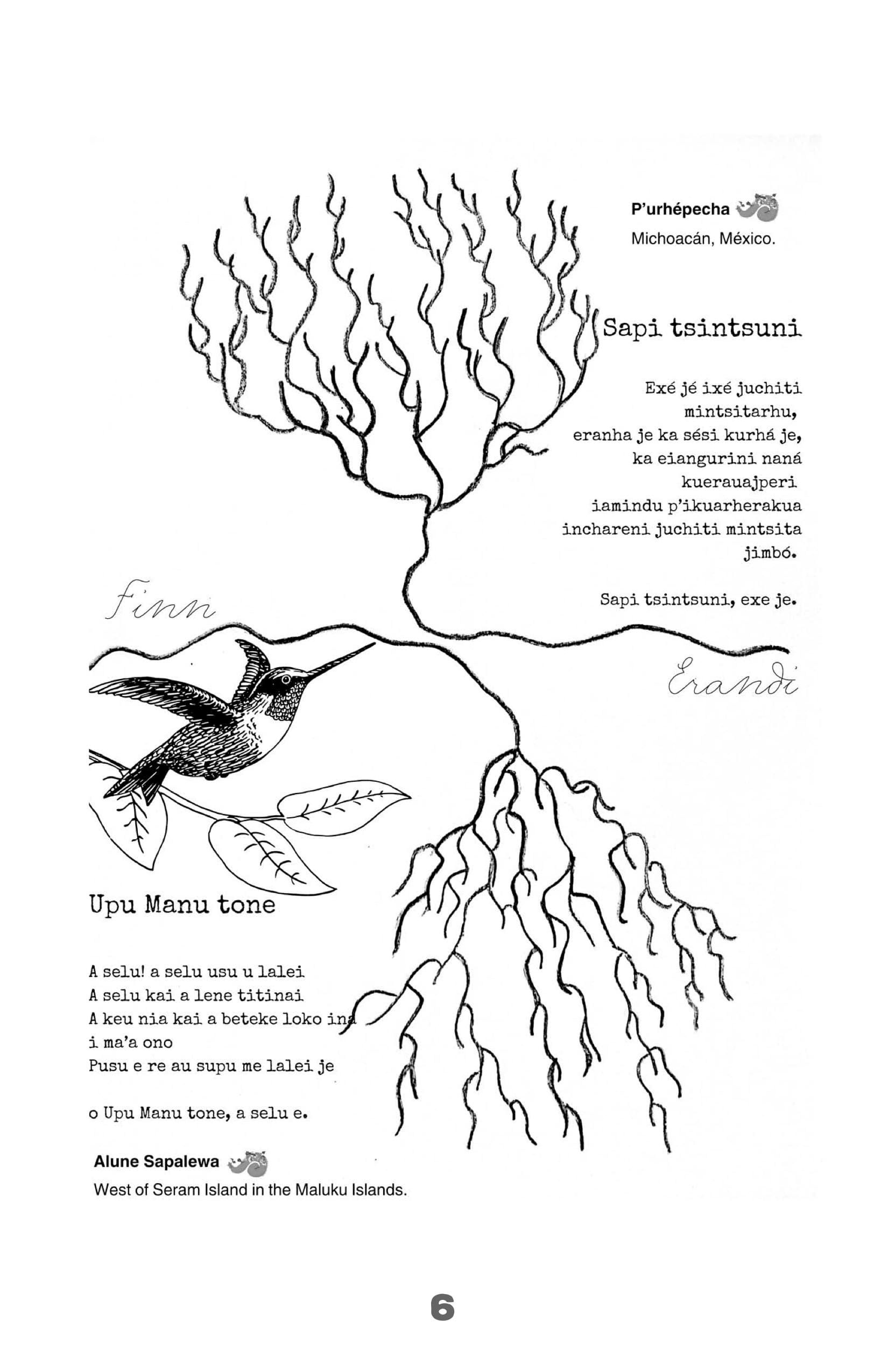
Zine: Milpamerica Re-member, Re-story, Re-pair Collaboration with Futuros Indígena
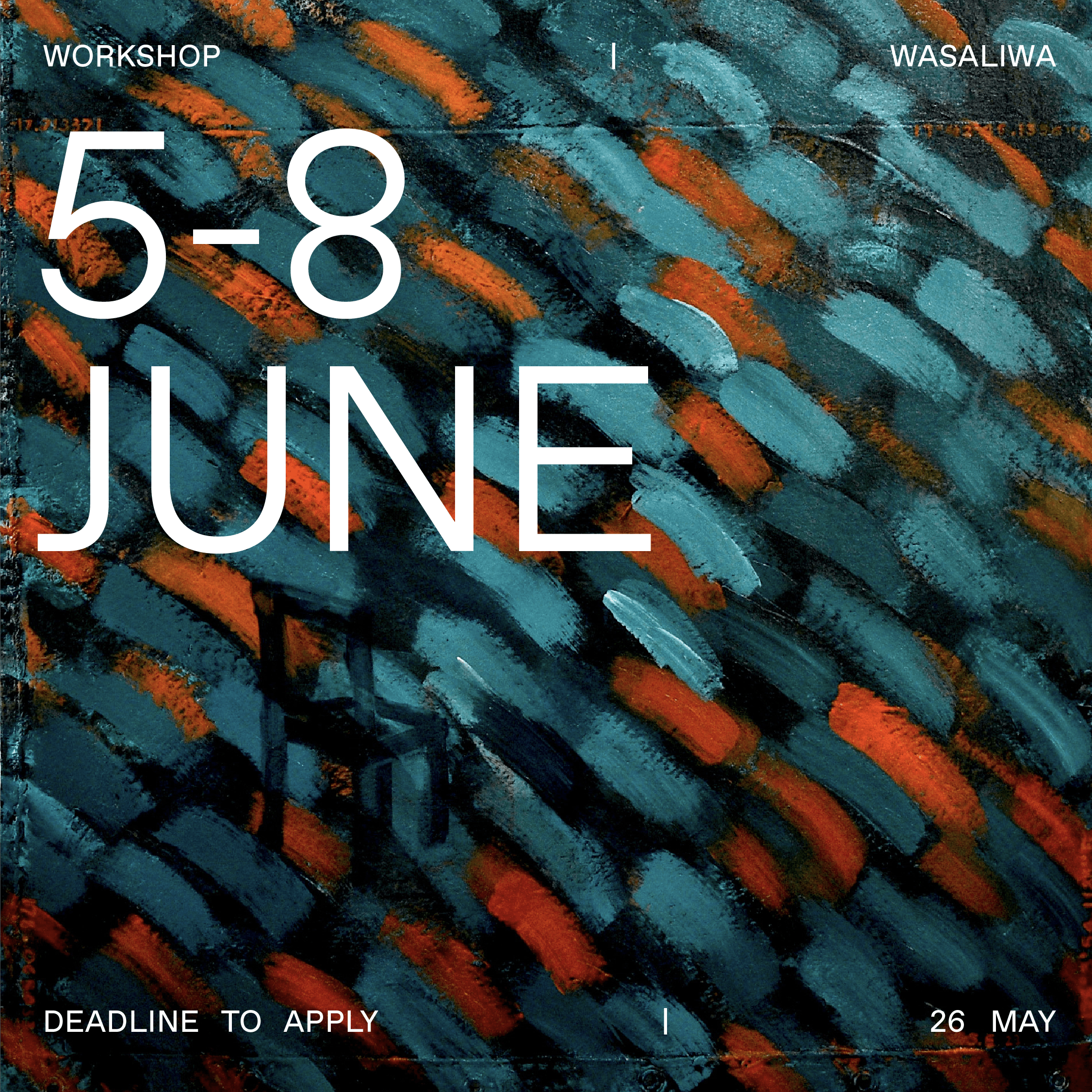
Open call: WASALIWA Susie Elliott, "Ocean Painting I"
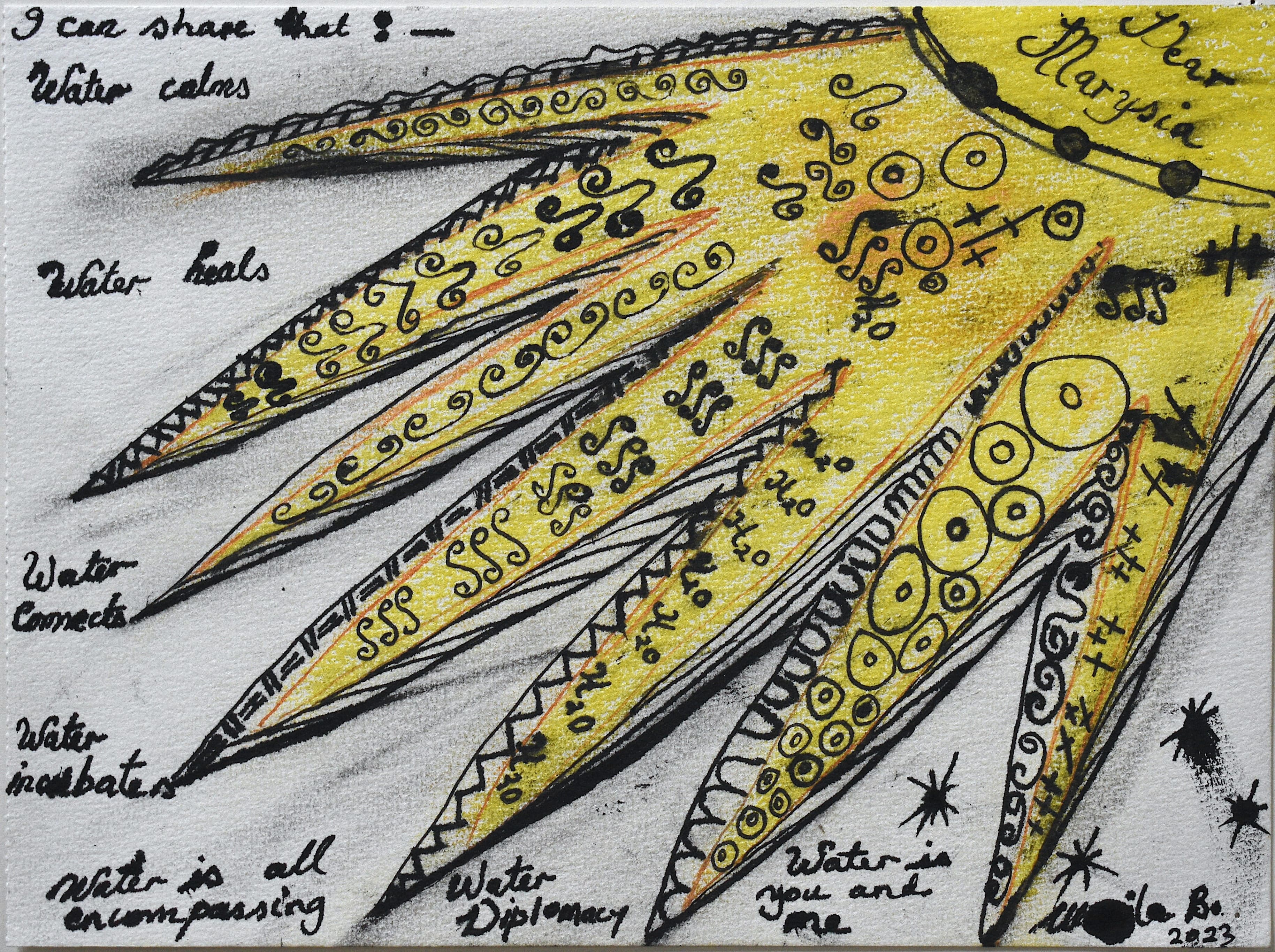
Ulamila Bulamaibau Offering as part of the exchange with Oceania Arts Centre (Fiji)
Climate Exchange Platform
The Climate Exchange Platform (CEP) is an online platform that brings together students from various international art academies working on the topic of the ecological crisis. Through a series of annual online workshops and talks, students have the opportunity to collaborate across borders and engage in international dialogues about environmental concerns, including questions of climate justice, land restitution and reparations, reproductive justice, and constellations of co-resistance.
Workshop programme CEP 2025
From March through May 2025, the Climate Exchange Platform will organize a new series of online workshops and talks focused on the urgent need to center climate justice in discussions about the ecological crisis. Students from art schools across Europe and the U.S. will collaborate online to explore what it means to make climate justice a central theme in both art and art education. Their dialogues and writing exercises will be informed by four lectures from leading international theorists and will result in an online publication. The workshops are led by artist and course director Dorine van Meel of the Sandberg Institute in Amsterdam.
Lecture programme CEP 2025
What happens if we center environmental justice in artistic practices that engage with the ecological crisis? What implications might this have for the ways in which we approach our research, collaborate locally or internationally, engage our audiences, and work toward impact and transformation? And, within our art academies, how could centering environmental justice influence the shaping of curricula and pedagogy?
In this online lecture series, we will hear from artists, curators, educators and writers who will discuss how their focus on environmental justice shapes their artistic, curatorial, educational, and writing practices. Everyone is welcome to participate; please email dorine.vanmeel@sandberg.nl to receive the Zoom link.
CEP #1: TELLURIC PEDAGOGIES
LECTURE BY CATALINA MEJIA MORENO
18 MARCH '25 8:00–9:00H CET
In our first lecture of this series on environmental justice, Catalina Mejia Moreno, a Colombian based in the UK, will share two processes of curriculum co-creation that bridge geographies and worldviews. Drawing upon ‘telluric thought,’ her talk is an invitation to consider how the ancestral indivisible nexus between earth and its communities can occupy a space in academic institutions.
Catalina Mejía Moreno is a sea swimmer, spatial practitioner, writer, educator and researcher. She is interested in practices of resistance, environmental, racial and spatial justice, as well as ecofeminist practice and thought. Through creative practice, activism and critique, she imagines tangible pathways for social and ecological restorations and imaginations. Catalina is the Climate Studies Lead across Spatial Practices at Central Saint Martins, University of the Artis in London.
CEP #2: RETHINKING CURATORIAL ECOLOGIES FROM THE BOTTOM
LECTURE BY KATHY-ANN TAN
25 MARCH '25 8:00–9:00H CET
In this lecture, curator and writer Kathy-Ann Tan will discuss their curatorial practice, particularly in relation to recent collaborations and mentorship with artists from the Climate Action Artist Residencies (CAAR) program. As art institutions, programs, and initiatives in Europe and the Global North increasingly offer residencies and curatorial programs focused on environmental justice, eco-feminism, and climate change in partnership with artists from the Global South, the question arises: Is there an accompanying sense of accountability for the impacts of racial capitalism? Are the flows in the global art economy directed toward transformative justice and sustainability, or do they merely reproduce colonial mechanisms of control that re-center Western narratives and art histories? How can critical interventions be made in and influence these discussions, especially in an era of increasing right-wing populism, which has been linked to anti-environmental policies like deforestation, extractivism, and the dispossession of Indigenous communities? Finally, how does the theory and practice of Black ecofeminist "bottoming" invite a rethinking of contemporary artistic and curatorial practice, along with its institutional entanglements?
Kathy-Ann Tan is a Berlin-based independent curator, writer and founder of Mental Health Arts Space (www.mhasberlin.com), a non-profit project space that centers the mental health, histories and narratives of BIPoC, queer and minoritized cultural practitioners. She is interested in alternative and sustainable forms of art dissemination, cultural production and institution-building committed to issues of social justice beyond a merely representational model of identity politics. As a former full-time academic, she has extensive experience in teaching, research, publishing, facilitating workshops and public speaking.
CEP #3: THE UNMARKED SCHOLAR REIMAGINES POST-16 EDUCATION
LECTURE BY CAROL AZUMA DENNIS
8 APRIL 2025 8:00–9:00H CETIn this presentation Professor Carol Azumah Dennis explores her decolonial dreams and suggests a manifesto for post-16 Education. Starting with a reflexive account of who she is and the stance from which she speaks, a necessary (though insufficient) part of a decolonial repertoire, Professor Dennis uses a series of “what if” speculations to develop a vision of an alternative future for post-16 education: What if the accepted purpose of post-16 education was to cultivate the ethical imagination? What if we refused a single authoritative voice, perspective or approach? What if choosing instead to remain within indeterminacy, accepting all conclusions as tentative, all settlements as temporary – including this one?
Carol Azumah Dennis is one of UKs 66 Black Women Professors. She positions herself as the 'unmarked scholar' which has a profound impact on what and how she knows the world. After a career in Further Education, she began working in Higher Education in 2010. Initially as Programme Leader for Post-16 Teacher Education she is currently the Director of PRAXIS, Faculty of Wellbeing, Education and Language Studies Centre for scholarship and innovation for teaching in Higher Education in the Open University. More recently she has been faculty lead for embedding Equity, Diversity and Inclusion (EDI) in research.
CEP #4: TOWARDS A PERFORMATIVE CLIMATE PROPAGANDA
LECTURE BY JONAS STAAL
15 APRIL 2025 8:00–9:00H CET
In this talk, Jonas Staal will introduce his research on climate and propaganda: outlining how different ideologies propagate fundamentally different perceptions (or denials) of the climate crisis, and fundamentally different imaginaries of the world to create as a result of ecosystem breakdown. Discussing liberal, libertarian, conspiracist and fascist climate propagandas on the one hand, Staal also argues for the need of an emancipatory counter-movement: a transformative climate propaganda, that enables us to change with the climate. Meaning, to dismantle predatory extractivist industries in defense of a world of collectivist regeneration.
Jonas Staal is a visual artist whose work deals with the relation between art, democracy, and propaganda. He is the founder of the artistic and political organization New World Summit (2012–ongoing) and with writer and lawyer Radha D’Souza he founded the Court for Intergenerational Climate Crimes (2021-ongoing).His publications include Propaganda Art in the 21st Century (The MIT Press, 2019) and Climate Propagandas: Stories of Extinction and Regeneration (The MIT Press, 2024).
Participating art schools and institutions
The participating art schools and institutions include the Jan van Eyck Academie in Maastricht, the Art and Ecology master's programme at Goldsmiths University in London, the Center for Creative Ecologies at the University of California in Santa Cruz, the IZK Institute for Contemporary Art in Graz, Climate Forum at Spatial Practices at Central Saint Martins UAL in London and the Sandberg Instituut in Amsterdam.
CEP 2025 participants
Participants of the CEP '25 are Binciya Hamza, Natalie Brown, Aarohi Dalvi, Sara Niewiejska, Carolina Manríquez Poblete, Eden Bhutia and Imke Hullmann.
Lecture programme CEP 2024
CEP #1: PEDAGOGIES OF CHANGE
PANEL BY LAURIE PALMER, GEDIMINAS URBONAS AND ANA BRAVO PÉREZ
8 APRIL 2024
This panel discussion will feature the experiences of three artist-educators in order to explore how pedagogical practices – particularly those that focus on and facilitate practices of care, community, and generative criticality – can help students approach, understand, and address urgent and complex ecological issues through their artistic practices. Drawing on a variety of approaches – including feminist, multispecies, and decolonial approaches – the panelists will discuss the ways in which they have created space for these alternative pedagogical programs and practices in a variety of different academic institutional settings. Panelists are Laurie Palmer (University of California, Santa Cruz), Gediminas Urbonas (Massachusetts Institute of Technology) and Ana Bravo Pérez (ArtEZ University).
CEP #2: BRINGING THEORIES OF CHANGE INTO PRACTICE
GESTURING TOWARDS DECOLONIAL FUTURES
22 APRIL 2024
Join Azul Duque and Dani D'Emilia of Gesturing Towards Decolonial Futures, along with Jay Jordan and Isa Fremeaux from the Laboratory of Insurrectionary Imagination for a participatory workshop that looks at how to bring theories of change into practice. Members of the two groups will each give a 40-minute presentation and/or workshop, followed by 30 minutes of discussion between the two groups, facilitated by session organisers.
CEP #3: ART AND COLLECTIVE ACTION
PANEL WITH DECOLONIZE THIS PLACE, 4BID GALLERY AND EXTINCTION REBELLION ARTS CIRCLE AMSTERDAM
6 MAY 2024
Join members of Decolonize This Place (Amin Husain and Nitasha Dhillon), 4BID Gallery (Tiana), and Extinction Rebellion Arts Circle Amsterdam (Freija and Es) for a conversation on art and collective action. In this session, contributors will share experiences from their work, and discuss topics including solidarity-building, bringing art into protest spaces, and methods for using art to ignite socio-political change. The contributors will provide introductions and examples of their work before engaging in a one-hour facilitated discussion, followed by a 45-minute Q&A.
CEP #4: COLLABORATING TOWARDS CLIMATE JUSTICE
PANEL WITH RALPH EYA, ROSA MARINA FLORES CRUZ AND TERESA BORASINO
20 MAY 2024
In this fourth online workshop we will engage with the question of how can we build networks of solidarity and support with those that are directly affected by ecological destruction and climate breakdown? What are meaningful ways of (artistic) collaboration and how do we not reproduce existing power dynamics? We will hear from different speakers, including artist Ralph Eya and activist Rosa Marina Flores Cruz, who will share their practices and invite the audience to engage through practical exercises with their work. We will also learn from Teresa Borasino about the Climate Justice Code, developed between 2019 and 2023 by multiple cultural practitioners at Casco Art Institute. The CJC is a tool for responding to climate breakdown trans-oceanically and intersectionally, across the cultural sector, highlighting the shared yet differentiated power and responsibility we all have to address the crisis.
CEP 2024 participants
Participants and organisers of the CEP 2024 are Chessa Adsit-Morris, Madalen Claire Benson, Imke Hullmann, Marik de Koning, Bethany Copsey, Jane Lawson and Julien Thomas.
Related events
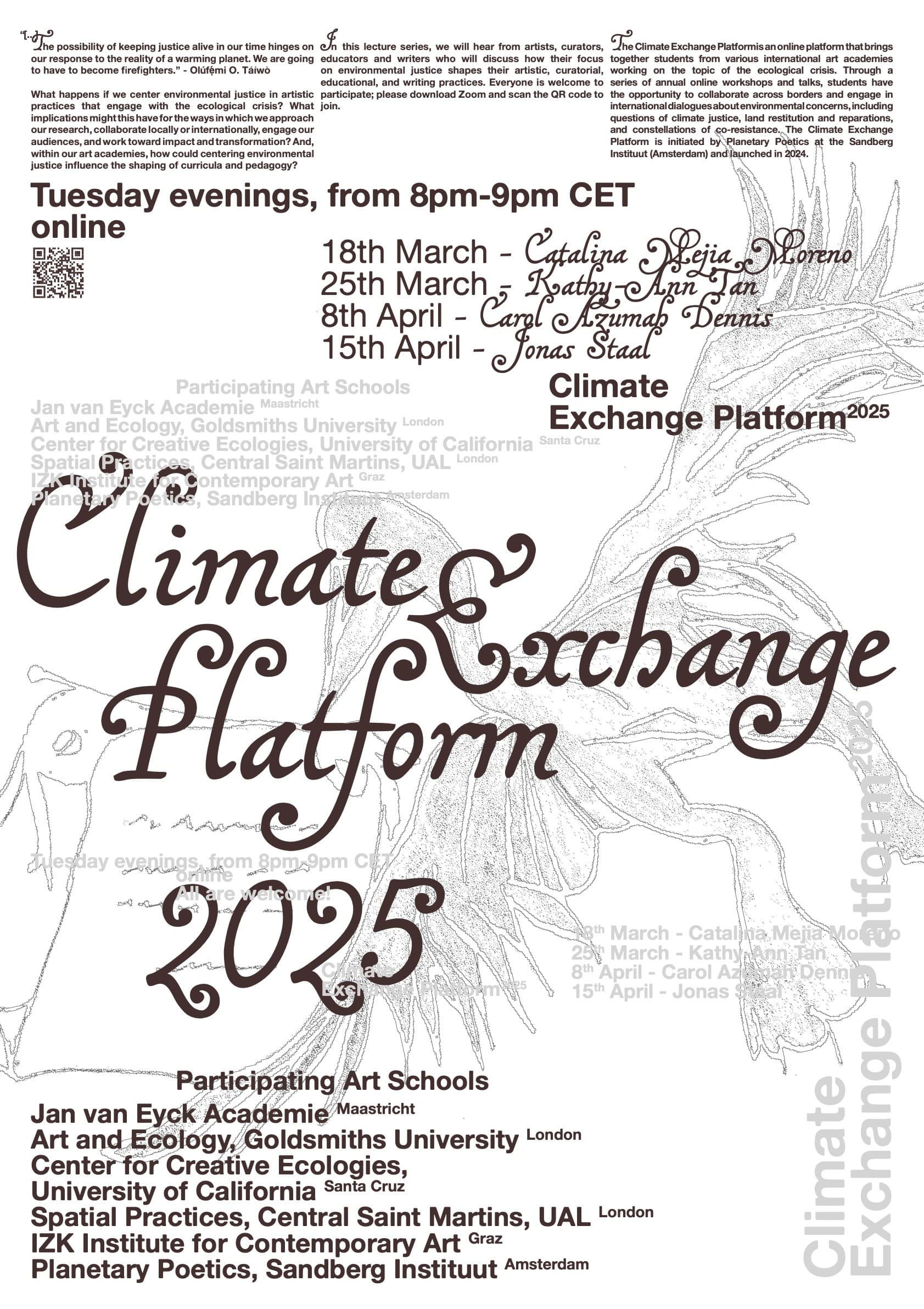
Past Event
Planetary Poetics | Climate Exchange Platform Lecture Series
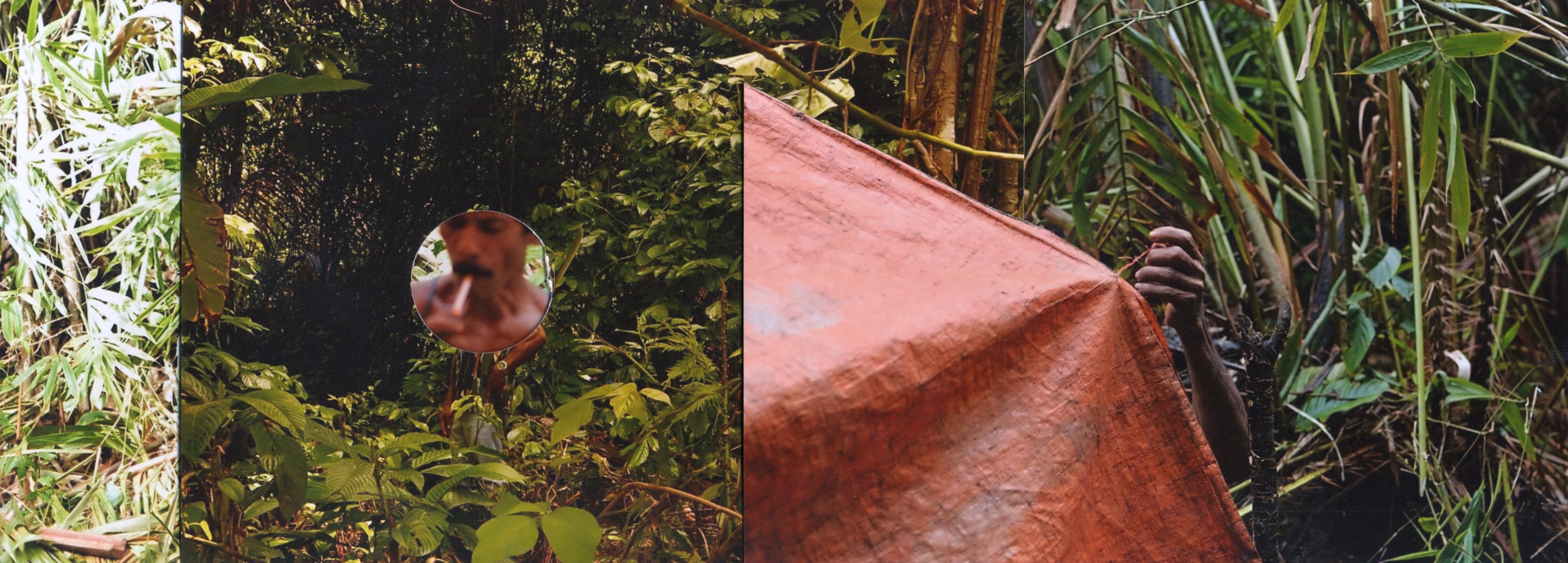
Past Event
Finn Maätita & Jerrold Saija | Tones of the Ecotone
Past Event
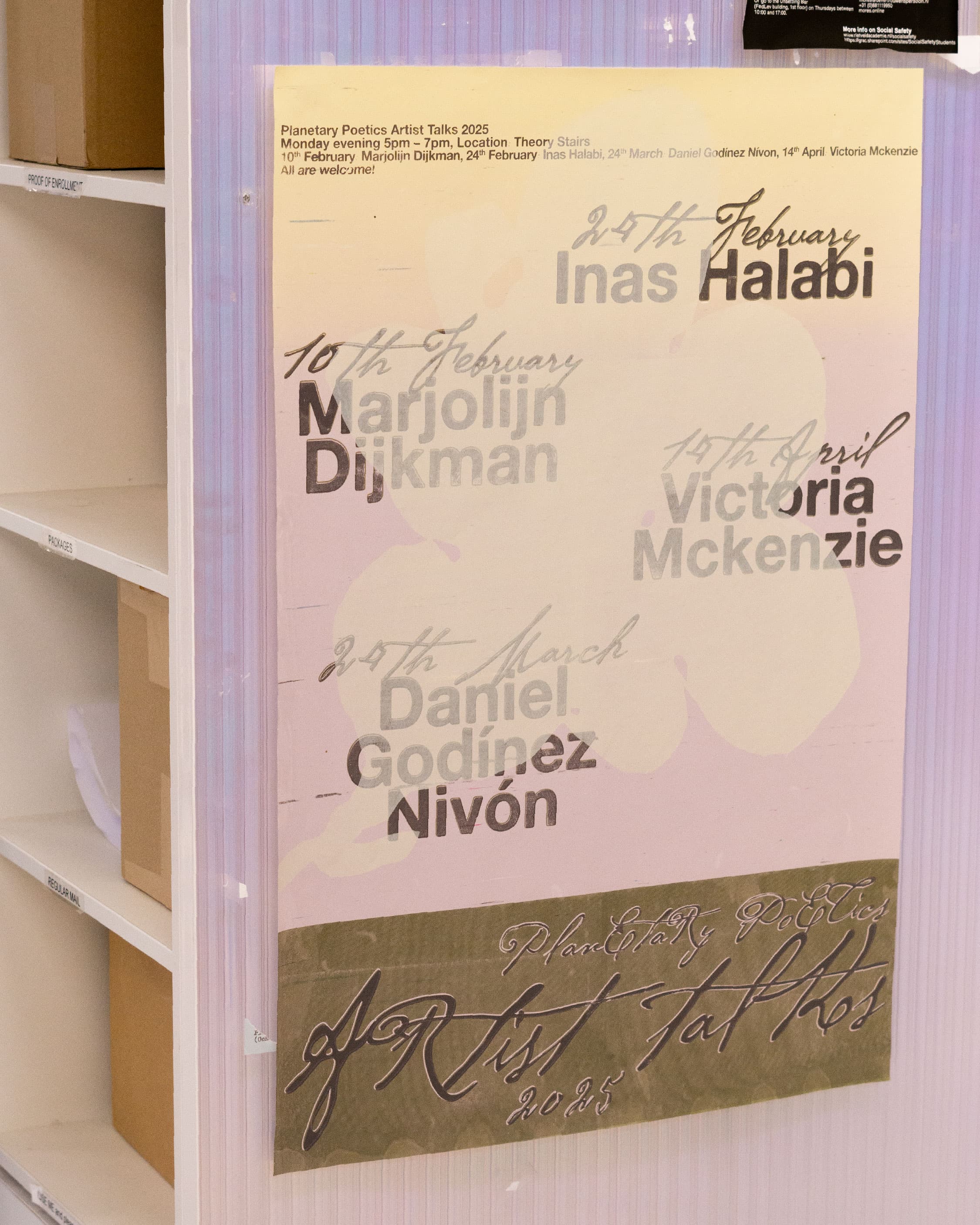
Planetary Poetics | Artist talks Inas Halabi, Daniel Godínez Nivón, Victoria Mckenzie
Past Event
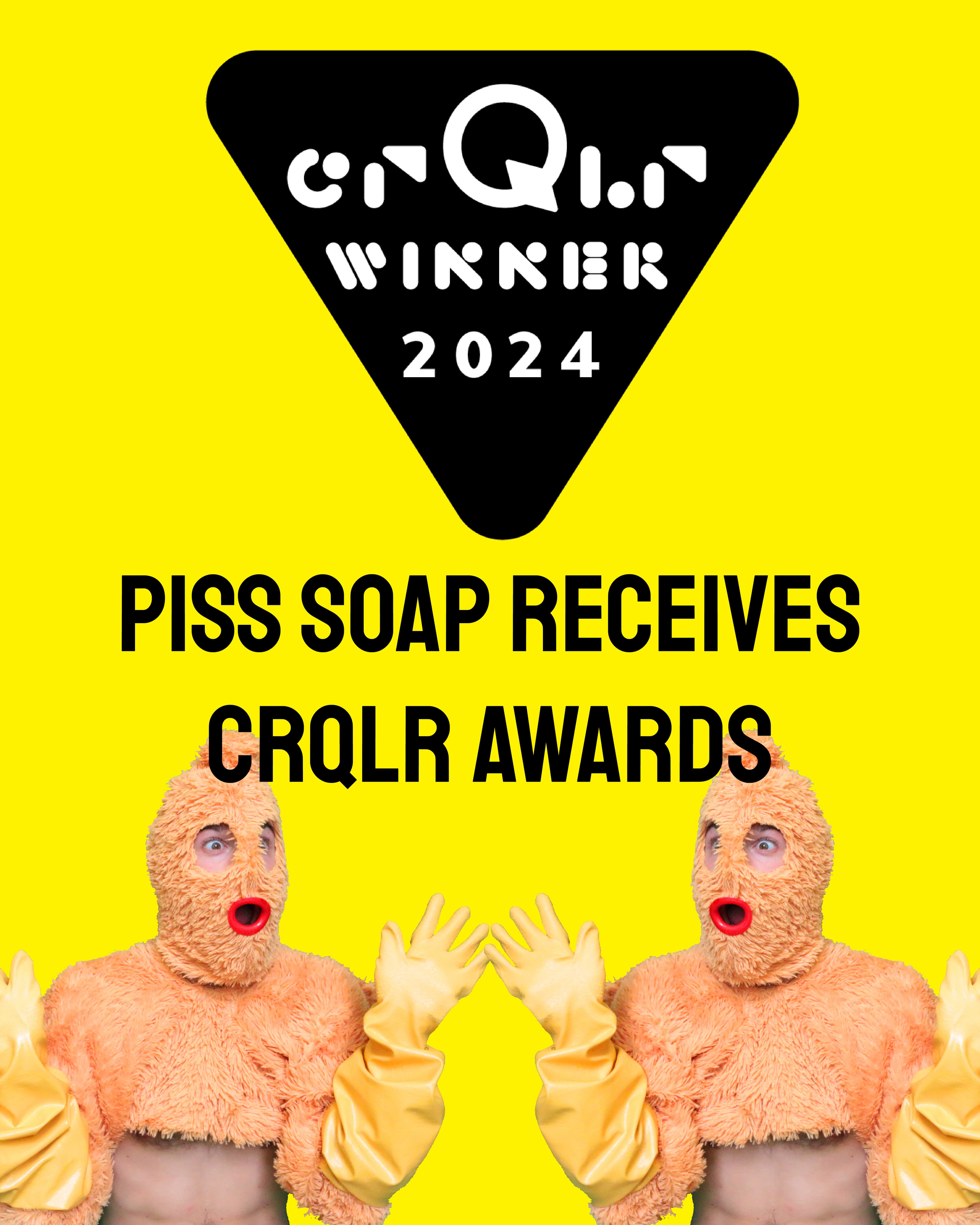
Arthur Guilleminot | Piss Soap awarded by the Crqlr Award 2024
Past Event